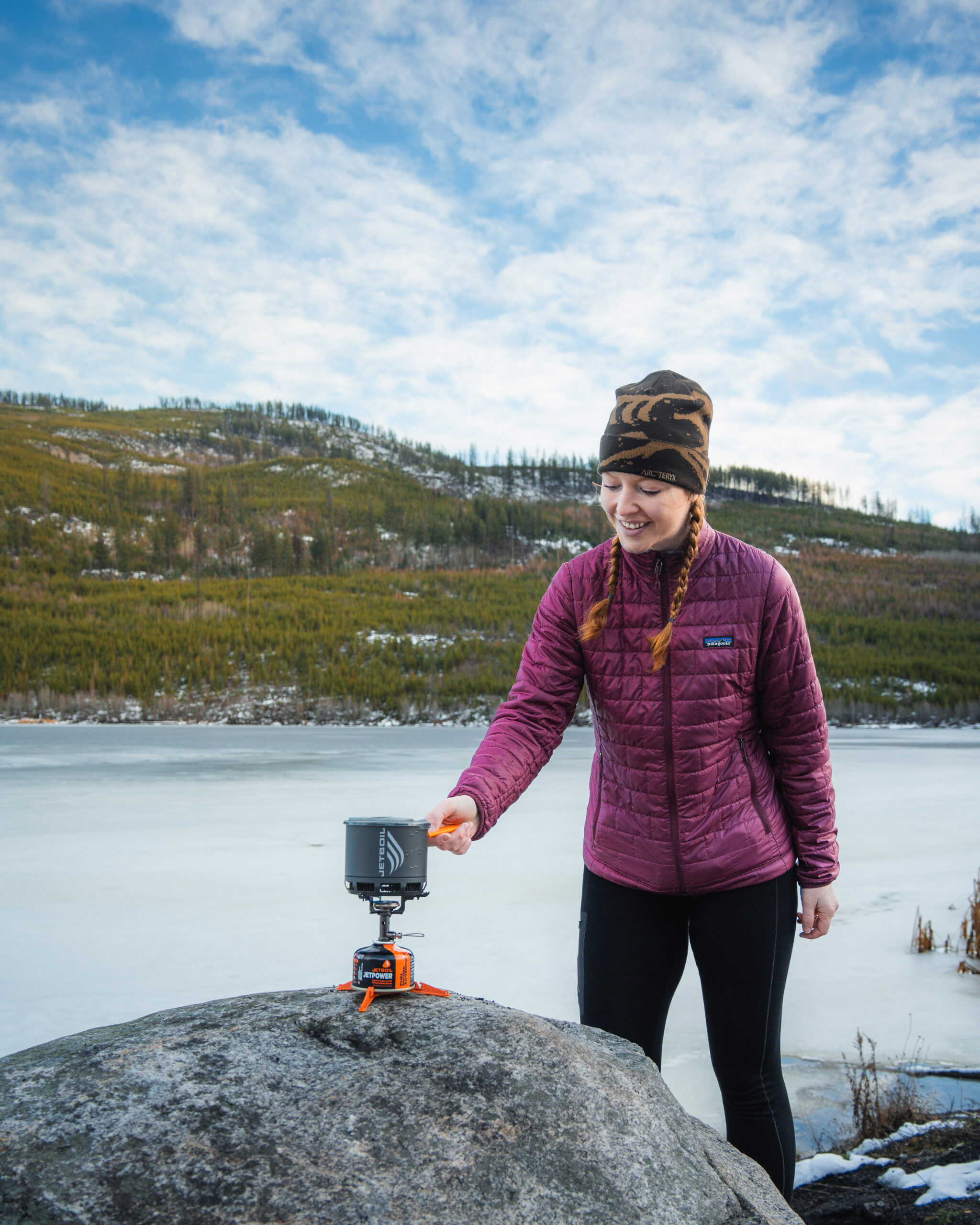
I am here to remind you that camp cooking doesn’t need to be complicated to be good!
A Smooth Camp Cooking Experience Is All In The Packing
Over the years, I learned that the best camp meals usually come from keeping things simple, packing intentionally, and relying on gear that actually works when you need it to.
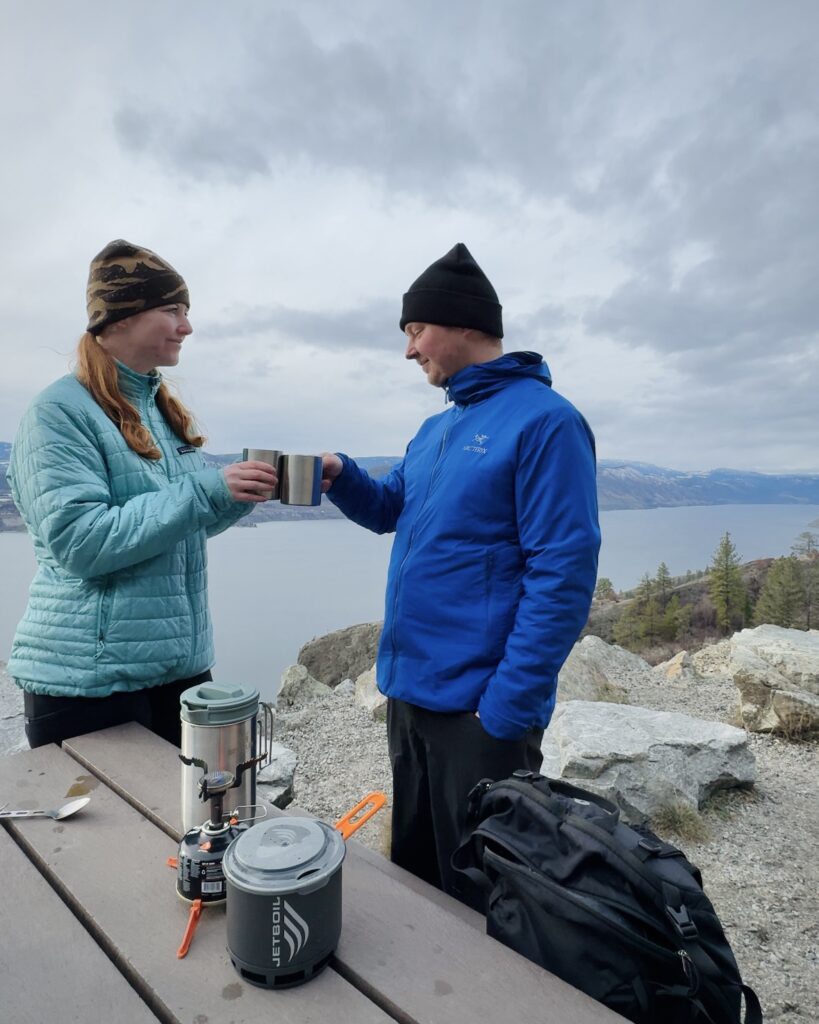
Whether you’re heading out for a long weekend at a provincial park or setting up a base camp in the backcountry for a few days of exploring, having the right cooking setup can completely change how your trip ends up going.
For shorter trips, the goal is always the same: lightweight, efficient, and easy to use. I want gear that packs down small, sets up quickly, and lets us spend more time outside and less time messing around with equipment.
A solid camp cooking system means hot meals without stress, quick morning coffees, and fewer dishes at the end of the day.
In this guide, I’m sharing my go-to camp cooking essentials for a three-day trip, including the pieces I reach for every time, the items I’ve learned we don’t need, and why lightweight systems make such a difference. If you’re looking to simplify your camp kitchen without sacrificing comfort, this is a great place to start.
How I Approach Camp Cooking on a 3-Day Trip
When I’m packing for a three-day camp trip, I always start with the same mindset: less gear, better systems.
Over time, I’ve learned that bringing too much into camp often makes cooking feel more stressful than enjoyable. Instead, I focus on a small, reliable setup that covers everything I need without overcomplicating the experience.
For shorter trips, I rely on one main cooking system that can handle boiling water, cooking simple meals, and making coffee in the morning.
I plan my meals around that setup rather than packing extra gadgets, pots, or accessories that I don’t end up using.
Less is more when you have to clean your pots and utensils right after every use!
It keeps my camp organized, makes setup quick, and helps the whole routine feel easy, especially after a full day of hiking.
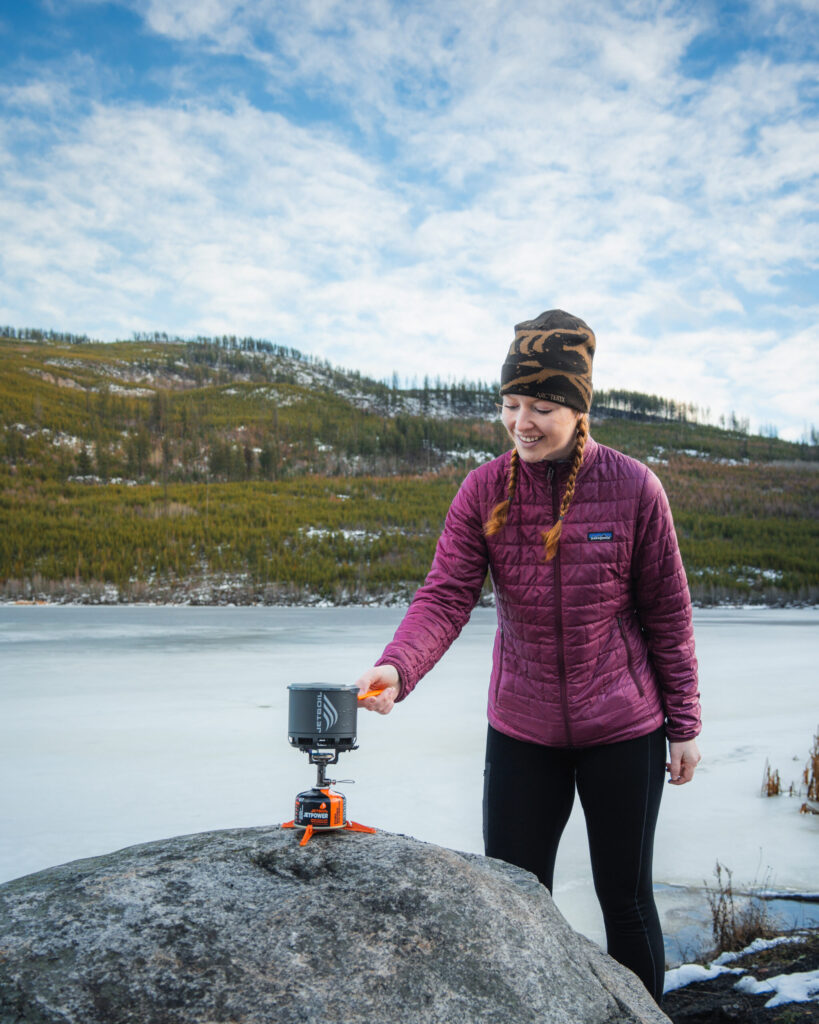
I also keep meals intentionally simple. Easy prepped breakfasts, quick lunches, and one-pot dinners make camp cooking feel relaxed instead of like another task on the to-do list. Fewer ingredients and fewer dishes mean more time to explore, unwind, or sit by the fire in the evening.
I will be sharing my favourite camp cooking recipes on this blog for you to get inspired!
My Core System (Lightweight & Reliable)
After trying a variety of stoves and setups over the years, I’ve found that integrated systems are by far the easiest and most efficient option, especially for three-day or longer trips where space and simplicity really matter. Every pound truly adds up when the trip is many kilometres!
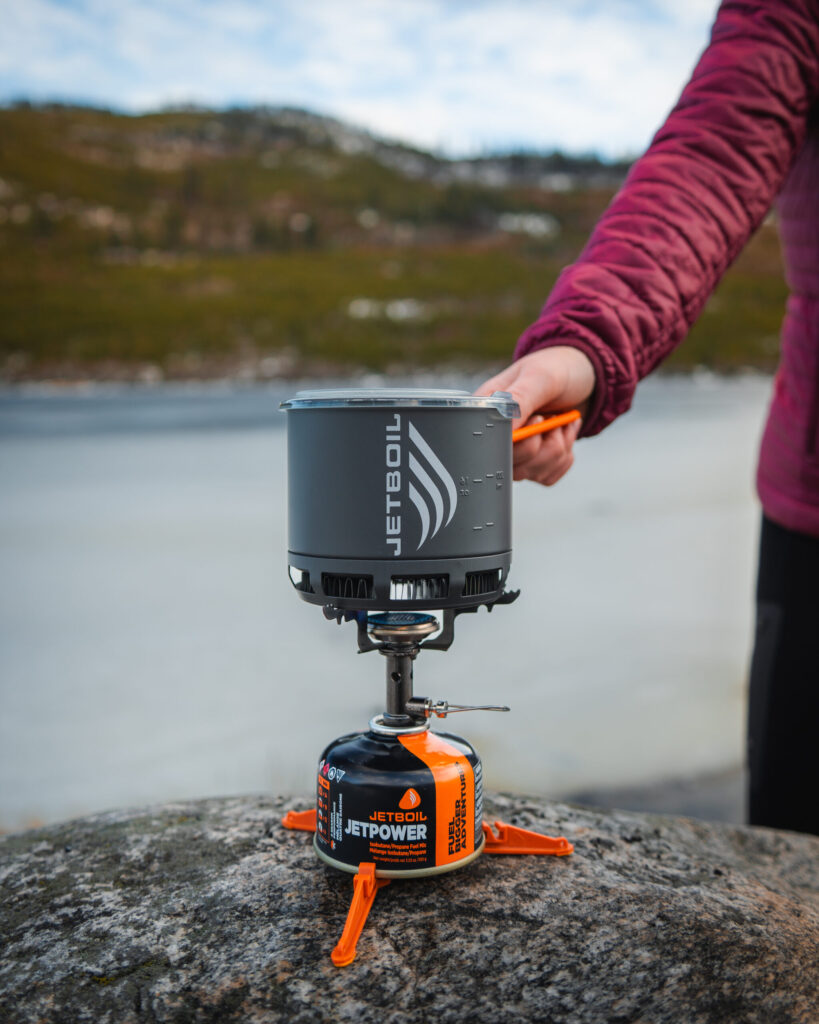
I personally use Jetboil for camp cooking every time, and it’s become one of those pieces of gear I pack without hesitation. (NO AFFILIATE LINKS)
The compact design keeps everything contained, the setup is quick, and the performance is consistent whether I’m cooking at a lakeside campsite or dealing with windier conditions in the BC backcountry.
Knowing I can boil water fast and reliably for our dinner makes everything stress-free and effortless.
One of the biggest advantages of a lightweight integrated stove system is simply in the speed! Hot water is the foundation of so many camp meals, from dehydrated dinners and pasta to oatmeal, and even cleanup. With one compact setup, I can keep meals flexible without hauling extra cookware or bulky gear, and the powerful burner means I don’t have to worry about wind.
For shorter trips especially, this simple approach makes a noticeable difference. It packs down small, takes up hardly any space, and eliminates the need to piece together multiple components.
When camp cooking feels this easy, it stays something I genuinely look forward to at the end of the day.
Food Storage & Simple Meal Planning
For shorter trips, I plan meals around simplicity and efficiency without sacrificing taste.
I still want to look forward to my camp meal at the end of the day. It’s a reward for all of the hard work I just did out on the trail!
I aim for foods that are easy to store, quick to cook, and flexible enough to adjust depending on the day. Dehydrated meals, pasta, rice dishes, wraps, and simple snacks all work well for this kind of trip.
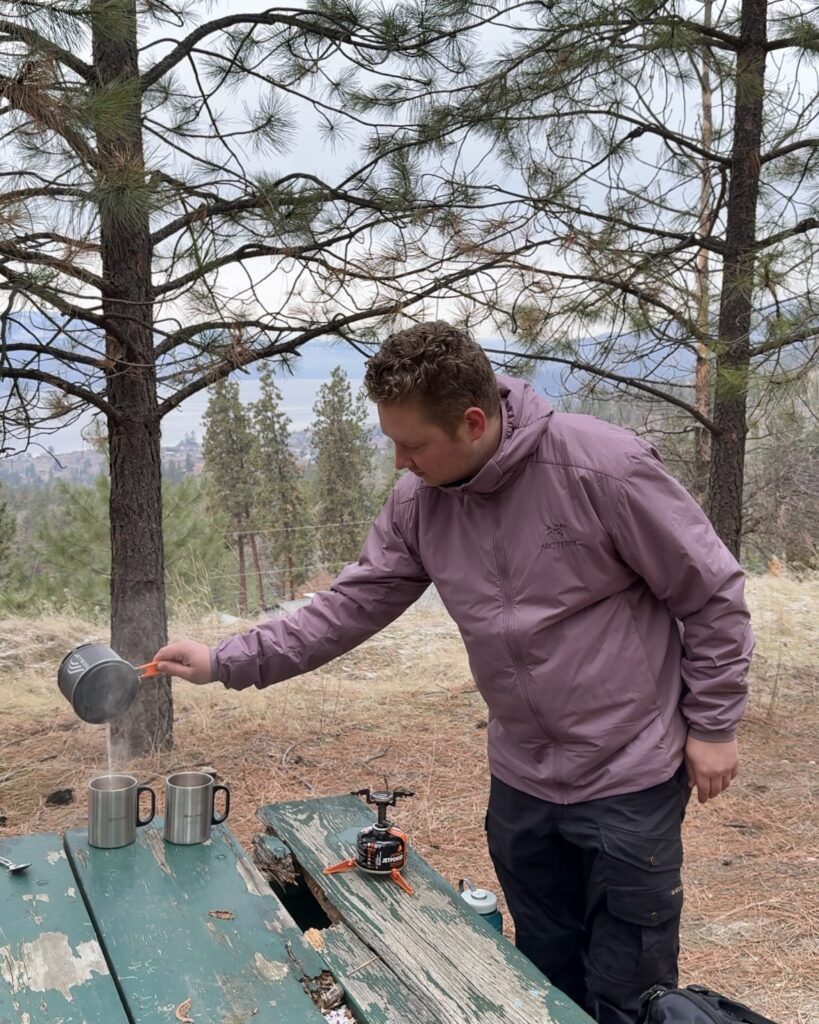
I usually separate meals by day ahead of time, so I’m not digging through everything at camp.
Dry food goes into reusable containers or bags, and anything perishable gets packed into a small cooler if needed.
Depending on where I’m camping, I also keep wildlife safety in mind and store food securely when required. In case you need the reminder:
PACK IN. PACK OUT. NO EXCEPTIONS.
Planning meals this way makes camp cooking feel relaxed instead of rushed, and it keeps packing and cleanup straightforward.
The Ultimate 3-Day Camp Cooking Checklist
If you’re heading out for a shorter camping trip, this checklist covers the essentials without overpacking:
Cooking System
• Lightweight stove system
• Fuel
• Lighter or matches
Cookware & Utensils
• One pot or pan
• Multi-use utensil
• Mug or cup
Food & Storage
• Pre-planned meals
• Lightweight Snacks (nuts, gummies, chips)
• Reusable containers or bags
Coffee & Extras
• Coffee or tea setup
• Water bottleCleanup
• Biodegradable soap
• Small dish scraper
• Garbage bag
Camp Cooking Should be Simple & Satisfying
Camp cooking doesn’t need to be elaborate to be satisfying. With a thoughtful setup, simple meals, and lightweight gear, it becomes one of the most enjoyable parts of a trip!
If you’re building your own camp kitchen, start small, focus on systems that work together, and choose gear you’ll actually enjoy using. A few well-chosen essentials can go a long way.
For more recommendations, you can explore my Gear and Camp Cooking guides, where I’ll be sharing meal ideas, packing tips, and outdoor gear I rely on for trips throughout British Columbia and beyond.